I/HIEHC INVESTMENT STUDY
IEH CORPORATION / OTCQX: IEHC

The critical
connection.

A small component. Decades of relevance.
A potentially much larger earnings base.

The bull case for a specialist connector manufacturer at the intersection of defense replenishment, long-lived design wins, and a possible margin recovery.

Source packet through July 17, 2026 · USD throughout
Historical research, with explicit assumptions. No live market feed.
A BUSINESS REBUILDING ITS SCALERevenue / $M
Historical figuresAtrium forecast, Apr 1

The upside requires more than a return to peak revenue. It requires profitable growth. [R · 10]

Backlog over the prior year
CEO, July 17 · J · 1

30–35%

Gross margin aspiration
CEO target · J · 5

~$9.5M

Cash cited by management
July interview · J · 5

1973

PATRIOT program heritage
Atrium report · R · 9

THE INVESTMENT CASE01 Thesis02 Business & moat03 Demand04 Earnings05 Value06 What to watch
01 / THE THESIS

The opportunity is in the gap
between orders and earnings.

IEH’s reported profitability was weak even as its order book strengthened. Bulls believe those two trajectories can converge as higher-priced shipments and better factory utilization reach the income statement.

01

Own a hard-to-replace position

Customers design IEH into equipment where a failed electrical connection is unacceptable. Qualification takes time; successful programs can generate repeat component orders for decades.

Investment implication: an installed program base can be economically valuable without a subscription model.

Management · J, pp. 3, 7
02

Let existing programs do the work

PATRIOT, APKWS and other named defense programs link IEH to replenishment and production expansion. Much of the near-term opportunity comes from engineering work completed years ago.

Investment implication: growth need not depend on winning an entirely new customer category.

Management · J, pp. 3, 7
03

Recover the economics

More aggressive pricing, additional shifts in Allentown, and in-house machining offer distinct paths to higher profit. Their combined effect is the central earnings hypothesis.

Investment implication: revenue growth and margin expansion can compound, if execution delivers.

Management · J, pp. 4–5
THE FULCRUM VARIABLE

How much of the larger order book converts into cash-generating revenue at restored margins?

Analyst interpretation. Backlog size alone does not establish earning power.
02 / BUSINESS & COMPETITIVE POSITION

Built into systems
that have to work.

IEH manufactures printed circuit board connectors, individual contacts, and related assemblies. It sells components to defense and aerospace suppliers, with smaller space and medical businesses. It does not manufacture the underlying weapons or aircraft.

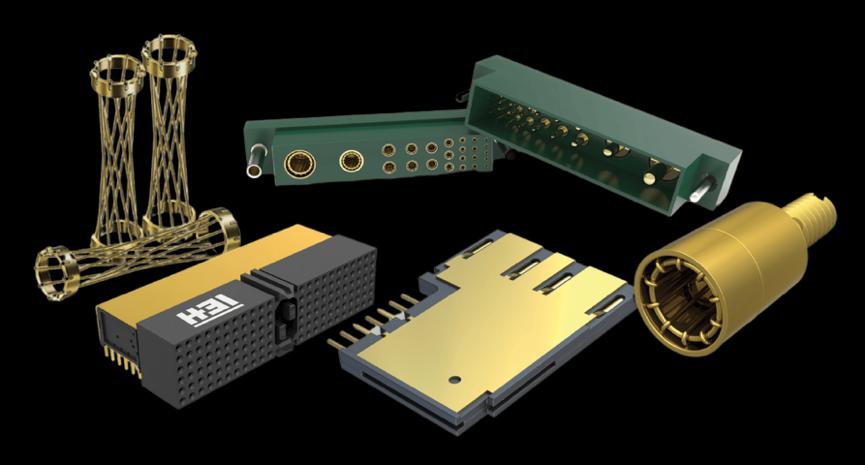
IEH hyperboloid contacts and several connector product formats, as shown in the supplied Atrium research report
IEH product suite · company image reproduced in Atrium, p. 3
THE TECHNOLOGY

A wire basket makes the connection.

Angled spring wires inside the socket wrap around the inserted pin, creating multiple continuous contact paths. The design combines low insertion force, vibration tolerance and long mating life.

Those properties matter in missile electronics, engine controls and other harsh environments. Customers are buying reliability within a specified application, not simply a cheap metal part.

IEH’s official technology materials support the design description. Performance claims are the manufacturer’s, and suitability varies by product and application. Company technical source ↗ · B · 2

How the business earns revenue

  1. Design and qualificationEngineers define the connector and validate it within the customer’s system.
  2. Program productionOrders follow the program’s build schedule, sometimes over a multiyear horizon.
  3. Repeated shipmentsIEH sells more components as customers manufacture, maintain or upgrade equipment.

Revenue is repeat product demand, not contracted ARR. Program timing and procurement volumes still matter. R · 9

A focused end-market mix

Nine months ended Dec. 31, 2025, as presented by Atrium.

  • Defense61%
  • Commercial aerospace29%
  • Space6%
  • Other / medical4%

Defense is the main engine. Aerospace provides a second recovery path; diversification remains smaller. R · 10

The moat has several layers.

Manufacturing know-how

Consistent quality at commercial volumes is difficult. Management emphasizes process expertise rather than a newly patented invention.

Qualification friction

Changing a qualified part can require engineering work and testing. The effort must be justified by meaningful savings or superior performance.

Long program lives

Atrium dates PATRIOT program involvement to 1973; management describes radar designs from the early 1970s. That heritage supports persistence, but not a fixed level of annual demand.

Asymmetric failure costs

The connector can be inexpensive relative to the whole system while expensive relative to a commodity connector. Reliability can support premium pricing.

Source evidence: R · 9, J · 1–3. Economic conclusions are analyst interpretations.

How strong is the “duopoly” claim?

Atrium estimates approximately 70% share for Smiths Interconnect and 30% for IEH in the specialized hyperboloid niche. These are report estimates, not verified shares of the global connector market. The report does not provide a reproducible market-sizing methodology.

The investable argument is narrower: IEH has established positions in certain qualified applications and management describes much of its business, particularly its margin contribution, as sole-source. That is not proof of exclusivity across every product or customer. In April, the CEO argued that IEH could win business through continuity of engineering and delivery support as Smiths changed ownership. This is management’s competitive thesis, not evidence that competitor customers have already defected. A · 6–7 Smiths is a substantial competitor; other connector designs compete when specifications allow. R · 3 J · 3

03 / DEMAND & BACKLOG

Old design wins.
New production demand.

The bull case is most concrete where IEH already supports programs receiving larger or longer-duration orders. Program exposure is evidence of participation, not a disclosed revenue forecast.

Publicly named exposures in the supplied materials
Program / marketWhat the packet establishesWhy it matters to the bull caseEvidence
PATRIOTRadar and missileManagement distinguishes long-standing radar work from missile connectors designed in roughly 10–12 years earlier. Atrium records a $5.1M order announced March 24.Production expansion can monetize a mature engineering position. Radar heritage does not establish the same tenure or content on every missile variant.A · 3J · 7R · 20
APKWSPrecision-guided rocketsCEO identifies it as a significant program and names BAE as prime contractor.Provides another route to munitions demand beyond PATRIOT.B · 4J · 3
LTAMDS / AMRAAMRadar and air-to-air missileManagement names both; the transcripts contain acronym transcription errors.Exposure spans established munitions and a newer radar generation.J · 3R · 10
MARK-48 / MARK-54TorpedoesAtrium names these programs and dates MARK-48 involvement to 1973.Broadens the installed defense program base.R · 10
THAAD / F-seriesMissile defense and aircraftAtrium identifies THAAD, F-series aircraft and F-35 among program exposures. No quantified economics are supplied.Additional channels for demand, with less financial detail in the packet.R · 10
Boeing / AirbusCommercial aerospaceCEO cites 737 MAX, 787 and Airbus platforms, selling through equipment suppliers rather than directly to the airframers.Commercial aircraft production can reinforce growth alongside defense.J · 4
Space / medicalDiversificationExisting smaller markets; management seeks greater exposure through products and acquisitions.Potential longer-term expansion beyond the two dominant markets.B · 5–8

The packet does not establish connector counts per platform, weighted selling prices, IEH’s dollar content per system, or program-level margins. No program revenue is imputed from prime-contractor production targets.

Read the backlog as a timeline.

Record orders, conflicting report totals

Atrium’s announcement summary says backlog exceeded $23M, while its thesis page says more than $28M for the same date. This site does not treat the higher figure as settled. R · 20 R · 3

$5.1M PATRIOT order announced

Atrium describes the order as IEH’s largest in decades. It is not added to a later backlog balance because inclusion and intervening shipments are not reconciled. R · 3, 20

Another 20% above the March record

The CEO describes further backlog growth, but gives no unambiguous dollar baseline. The percentage is kept as a management statement rather than converted into a synthetic backlog total. A · 3

Tripling, with a longer delivery tail

CEO says backlog tripled over the preceding year. Typical conversion is 12–24 months, with some larger orders extending two to three years, into 2028–2029. B · 3, 6

Growth reiterated; capacity response begins

CEO describes backlog as tripled over a year and doubled since calendar-year start. A second shift in some departments was scheduled for the following week. J · 1, 5

04 / THE EARNINGS INFLECTION

More revenue is only
half the equation.

Gold, labor and other input costs outpaced pricing. The bullish interpretation is that this is a recoverable cost-and-timing problem. The proof must come from shipment margins and cash conversion.

FY25 HISTORICAL26%Gross margin in Atrium$28.8M revenue · $1.3M EBITDAR · 9
FY28 ATRIUM FORECAST26%Gross margin forecast$40.4M revenue · $4.2M EBITDAR · 9
JULY CEO ASPIRATION30–35%Gross margin targetHigh-teens to mid-20s operating marginJ · 5

In June, management discussed a one-to-two-year return to 30–35% gross margins and upper-teens to low-20s operating margins. July’s six-to-twelve-month aspiration implies a faster recovery. B · 9

These are different evidence types and different periods. The CEO framed the targets as achievable within six to twelve months of the July interview. They are not reported results, and the operating-margin aspiration is materially above Atrium’s forecast.

Four levers that could restore profit

  1. Enforce price resetsManagement now takes the typical 90-day quotation validity seriously. Some agreements fix prices for one or two years; those are described as a smaller part of the business. Existing orders are not automatically repriced every 90 days.
  2. Absorb factory overheadAllentown provides physical room for equipment and staff. Higher throughput can spread fixed costs over more shipments.
  3. Bring machining in-houseScrew machines can reduce reliance on external suppliers. The payback depends on utilization, yield, staffing and total ownership cost.
  4. Manage input exposureManagement describes more strategic gold purchasing and supplier diversification. No quantified hedge coverage or locked-in gross margin is provided.

J · 4–5, 7–8 B · 4

THE PHYSICAL PLATFORM

Capacity was built
before the surge.

~49,000square feet across two facilities
Brooklyn~20,000 sq ft
Allentown~29,000 sq ft

In June, the CEO estimated Allentown manufacturing utilization at below 50%. By July, a second shift was planned in selected departments.

Spare floor space is not a guarantee of twice the revenue. Qualified people, bottleneck equipment, quality controls and customer approvals determine usable capacity. No precise revenue ceiling is disclosed. B · 7 J · 5

The pricing lag is real

In June, the CEO said a quote can take a year, 18 months or sometimes two years to become an order, shipment and recognized revenue. Better quote pricing therefore does not establish better margins in the next quarter. The bull case needs favorable prices to reach the shipped mix. B · 9

A specific reinvestment opportunity

In April, management described two screw machines already purchased and two more planned. Each was a low-six-figure investment, with an expected one-to-two-year payback. These are management estimates; outside suppliers will still be needed. A · 4, 6

WHY SMALL MARGIN CHANGES MATTER

At $40M of revenue, each additional gross-margin point adds $400,000 of gross profit.

Illustrative calculation. The increase reaches operating income only to the extent incremental operating expenses do not consume it.
THE FINANCIAL BASELINE

Keep the recovery
and the forecast separate.

Atrium’s April report provides the common baseline. Its FY26–FY28 estimates are preserved as dated forecasts even though later interviews discuss additional developments.

Atrium’s selected financial figures, USD millions except margins and EPS
MetricFY25 historicalFY26 estimateFY27 estimateFY28 estimate
Revenue28.829.234.440.4
Gross margin26%17%24%26%
EBITDA1.3(1.5)2.44.2
Net income1.0(2.0)1.22.7
Basic EPS, USD0.42(0.82)0.501.12
FCFF4.4(4.0)1.11.7

March fiscal year-end. Figures are rounded and reproduced from R · 9, with forecast terminology as used in the report. Basic EPS is not diluted EPS. FCFF is free cash flow to the firm, not cash available for shareholder distribution.

APRIL MANAGEMENT UPDATE

The CEO projected $36M of FY27 revenue, compared with Atrium’s $34.4M estimate.

April 21 interview, p. 5. This is a dated management projection, approximately 4.7% above Atrium’s April 1 forecast. It does not update the report’s other assumptions. A · 5

Cash gives management choices

The July CEO interview cites approximately $9.5M cash despite a loss-making prior year. That supports investment flexibility, but does not establish sustainable free cash flow or a protected share-price floor.

Inventory, receivables, new machinery and hiring can consume cash before the larger order book produces cash receipts. Track working capital alongside accounting earnings. J · 5–6

Management is oriented toward reinvestment

Atrium reports approximately 37% family ownership. The CEO is the fourth generation to run IEH and describes growth through internal investment and acquisitions as priorities.

June comments put dividends and buybacks outside the immediate agenda. Family ownership can support patience while reducing outside shareholders’ influence. R · 20 B · 7

Source audit: why some report figures are not carried into the model

The report has internal inconsistencies. The March 4 backlog varies between pp. 3 and 20; the FY27/FY28 SG&A and D&A lines on p. 15 do not reconcile cleanly to the displayed EBIT-to-EBITDA bridge. Some EPS entries also differ from the main tear sheet. This site uses p. 9 for its selected baseline table and does not import the inconsistent expense lines.

The report’s $2.2M “debt” input is described on p. 14 as operating leases and equipment financing, without a detailed split. Lease treatment should be consistent with the earnings multiple; it is not a clean bank-debt figure. The interactive model uses an explicit, editable net-cash assumption, with no claim that it is a freshly verified balance-sheet value. R · 8, 9, 14–15
05 / WHAT COULD IT BE WORTH?

The bull case,
in your own numbers.

Test a three-year operating scenario. The starting case assumes $48M of revenue, 33% gross margin and $7M of operating expense, with a 12× EBITDA multiple. All are analyst assumptions, not company guidance.

Scenario assumptions

Capital structure & cash conversion

Default reference price: $19.00, as printed in the April 1 report. It is not today’s price. Change it to your intended entry price. R · 1

ILLUSTRATIVE VALUE AT EXIT
$38.83/ share

Terminal value, not a present-value price target. Assumes no dividends or buybacks. Default 3.1M shares conservatively includes all options shown by Atrium, with no exercise proceeds credited. It is not a verified current diluted count.

How much is execution worth?

Exit value per share across gross margins and valuation multiples. All other inputs follow your model.

Gross margin and EBITDA multiple sensitivity

Atrium’s published case: $26

The April report targets $26 using approximately $4.2M of FY28 EBITDA at 15×, adding $9.3M cash, subtracting $2.2M of reported debt, and using approximately 2.7M treasury-stock-method shares. The report shows 37% upside to its $19 reference price.

The site’s bull scenario instead tests substantially stronger operating performance with a lower default multiple and more shares. These are different cases, not a revision issued by Atrium. R · 8, 23

Where an outlier outcome comes from

Volume growth expands the gross-profit pool. Margin recovery lets more of that pool flow through. A modest share base turns incremental profit into meaningful per-share earnings.

A higher multiple could add upside, but is not needed to explain the operating thesis. Weak cash conversion, dilution or a lower exit multiple can offset much of the gain. Acquisitions and unawarded programs contribute no incremental value in the default case.

06 / UNDERWRITING & MONITORING

A strong thesis needs
clear ways to be wrong.

The bull case becomes more credible when quarterly results confirm the mechanism. These are analyst monitoring criteria, not management commitments or real-time alerts.

The five variables that deserve the most attention
VariableEvidence that supports the thesisEvidence that weakens it
Backlog conversionShipments rise; delivery horizons stay manageable; repeat orders replenish the book.Backlog grows mainly through longer lead times while near-term shipments stall.
Price versus costGross margin improves as higher-priced orders ship, with customer retention intact.Gold and labor costs keep outpacing realized prices, or customers successfully resist resets.
Factory executionAllentown output increases with stable quality and improving cost absorption.Labor bottlenecks, scrap, late deliveries or new fixed costs absorb the extra gross profit.
Cash conversionOperating cash follows earnings through the cycle; inventory growth is proportionate.Receivables and inventory consume the recovery, or capital spending exceeds the expected benefit.
Capital disciplineAcquisitions are small, understandable and accretive after integration costs.Cash is spent on a poor fit, dilution rises, or integration distracts from the core opportunity.
Input costs & timing

Gold content is constrained by specifications; management cannot simply remove it. Pricing resets affect future quotes and shipments, while existing commitments may remain exposed. A renewed gold increase can delay or reverse the margin recovery. J · 6–8

Concentration & cyclicality

The report says the largest customer represented 26% of revenue in its most recent quarter. Program funding, airframer disruptions and procurement timing can materially affect results even when IEH retains its qualified position. R · 9, 22

Liquidity & governance

Atrium reports thin OTC trading and concentrated ownership. A good operating result need not produce a prompt rerating, and sizeable purchases or sales can move the price. Historical trading-volume figures are not current liquidity estimates. R · 6, 22

Controls & execution history

Management describes ERP and inventory-accounting problems that interrupted reporting, followed by catch-up filings and restored reporting. The history matters because growth requires dependable systems and controls. Resolution of the past episode does not guarantee future execution. B · 3–4

Optionality that should not be capitalized yet

Medical expansion, complementary acquisitions and Golden Dome are potential growth paths. The supplied interviews do not establish enough committed economics to assign them separate value. Management also distinguishes large, sophisticated unmanned aircraft from cheap disposable drones that may not need premium connectors. J · 4, 8 B · 7–8

The next management questions
  1. How much backlog is scheduled within 12 months, and what share carries recently increased prices?
  2. What is the gross-margin bridge between repricing, mix, gold cost and utilization?
  3. What revenue level and operating-expense base support the July margin aspiration?
  4. Which specific production bottleneck limits shipment growth today?
  5. What working capital and capital expenditure are required before the backlog converts to cash?
THE INVESTMENT JUDGMENT

A credible path to much higher earnings.
A recovery that still has to be earned.

The strongest bull case is that IEH already owns useful positions in growing programs, has room to increase production, and can recapture the economics of its specialized product. The key underwriting task is to establish the pace, profitability and cash cost of that conversion.

RESEARCH FILES / EVIDENCE & METHOD

Follow the evidence.

Every document reference opens the supplied PDF at the cited page. The study synthesizes all four attachments, with later management comments kept separate from the April analyst forecast.

Evidence labels

Historical: past figures as presented in the supplied report. Management: interview statements, including estimates and aspirations. Atrium forecast: April 1 analyst projections. Illustrative: this site’s calculations and assumptions.

Source interests & limitations

Atrium discloses US$28,800 of company-paid research coverage for 12 months and retained editorial control. The July interviewer also identifies IEH as a paying client. These sources are informed but interested. R · 25 J · 2

Scope & dates

Prepared September 9, 2026 from the supplied packet dated through July 17, 2026. This is not a comprehensive update of subsequent filings, prices or events. An official IEH technology page was consulted for the design explanation. Transcript acronym errors are normalized using the report; no missing program economics are invented.

Model method

Gross profit = revenue × gross margin. EBIT = gross profit − operating expense. EBITDA = EBIT + total D&A. Simplified EPS = after-tax EBIT ÷ shares, excluding net interest and company-specific tax attributes. Indicative unlevered FCF = after-tax EBIT + D&A − capex − incremental working capital. Equity value = EBITDA × multiple + terminal net cash. Operating expense excludes cost of goods sold; total D&A is added back only once.